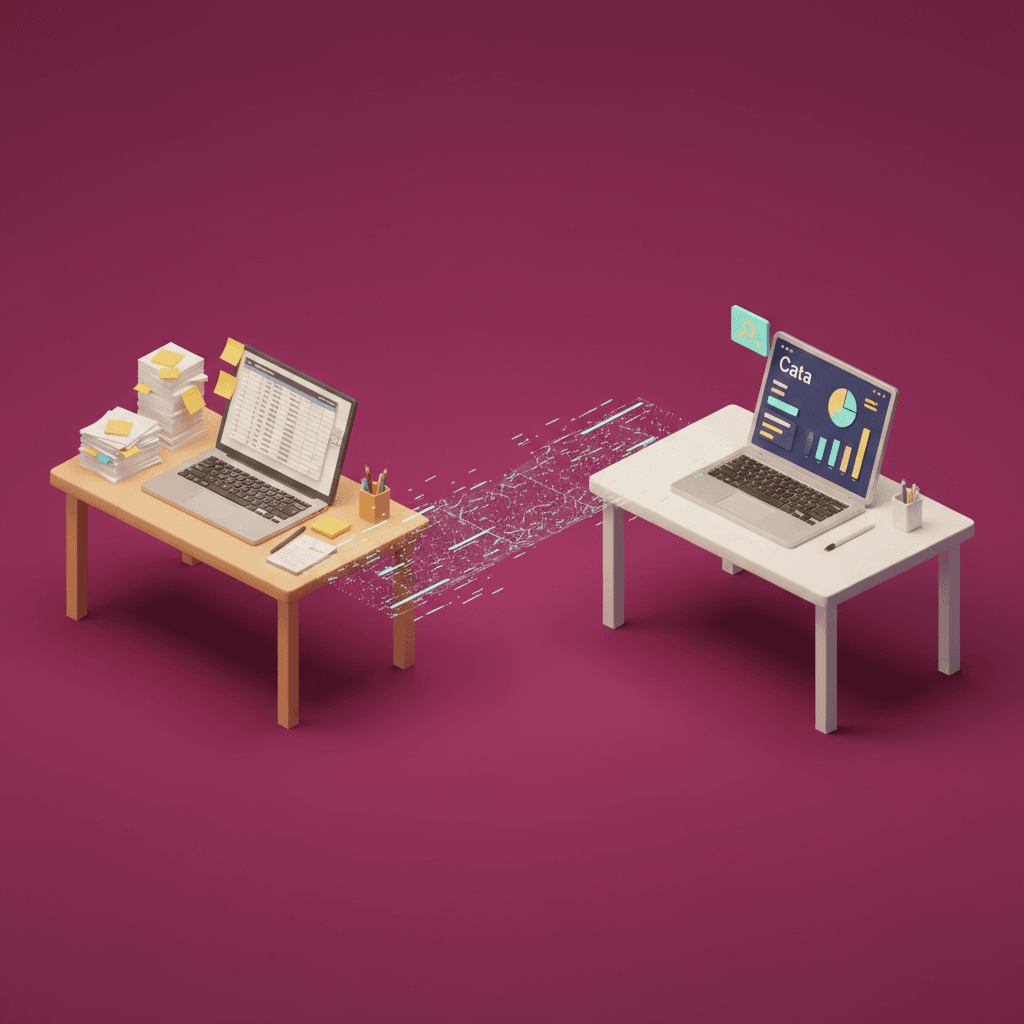
For many small and medium enterprises, digital transformation has always felt like something that other companies do.
Big companies. Tech companies. Companies with entire departments dedicated to IT, dashboards, and meetings about dashboards.
For everyone else, digitalisation often sounded expensive, complicated, risky, and slightly exhausting. It was easier to say, “We’re doing fine,” or “We’ll look at it later,” or the classic, “We don’t really need it.”
And to be fair, for a long time, that instinct was not entirely wrong.
Early digital systems were costly. Custom software felt like a luxury. Off-the-shelf tools rarely fit properly. Learning new systems took time that most SMEs simply did not have. Many businesses survived and even grew using experience, instinct, and a remarkable collection of spreadsheets.
So why talk about it now?
Because the conditions have quietly changed.
Digital tools today are no longer just for companies with big budgets and dedicated IT teams. Modern platforms, automation tools, and vibe coding approaches have made it possible to build useful systems faster, cheaper, and with far less pain than before. What once required months can now take weeks. What once required large teams can now be done by small ones. What once felt risky now feels experimental in a good way.
More importantly, digitalisation no longer has to be a dramatic, all-or-nothing exercise. It can start small. One process. One report. One painful spreadsheet. One recurring headache that everyone pretends is “normal.”
This matters because many SMEs are already more digital than they realise. Orders arrive through WhatsApp. Payments move through apps. Marketing lives on social platforms. The business is already digital. It is just not organised digitally.
The hesitation often comes from familiarity. “We know our way of working.” “Our staff are comfortable.” “Changing will slow us down.” And sometimes, it will. For a short while. But staying still while everything else moves usually costs more in the long run.
There is also the quiet fear of exposure. When processes are finally mapped, inefficiencies become visible. And visibility can be uncomfortable. But it is also the first step toward improvement.
Digitalisation is not about replacing people or turning businesses into machines. It is about removing unnecessary friction so people can focus on decisions, customers, and growth instead of chasing data and fixing preventable errors.
At Bynry Foundry, we often meet SMEs who say, “We should have done this earlier.” They rarely say, “We should not have done this at all.”
Having worked on large-scale digital transformation for public-listed companies, our team has seen every version of this journey, from overly ambitious programmes to small, quiet improvements that made the biggest difference. Today, with modern platforms and Ai-powered coding approaches, we can bring that experience to SMEs in a way that is practical, affordable, and far less intimidating.
It is not about turning yourselved into a tech company.
It is about becoming a company that is easier to run.
If digitalisation has always felt too expensive, too unfamiliar, or simply unnecessary, this might finally be the moment to look again. Not because everyone else is doing it, but because it has finally become realistic.
You can start with a conversation. And perhaps a spreadsheet you secretly dislike.
Leave a Reply